| Attention! Due to the May 1st holiday, Labor Day, we will remain closed until Monday, May 4th. Both customer service and order processing will resume on that day. Thank you very much, and we apologize for any inconvenience. |
By buying this product you can collect up to 6 points. Your cart will total 6 points that can be converted into a voucher of €0.18.
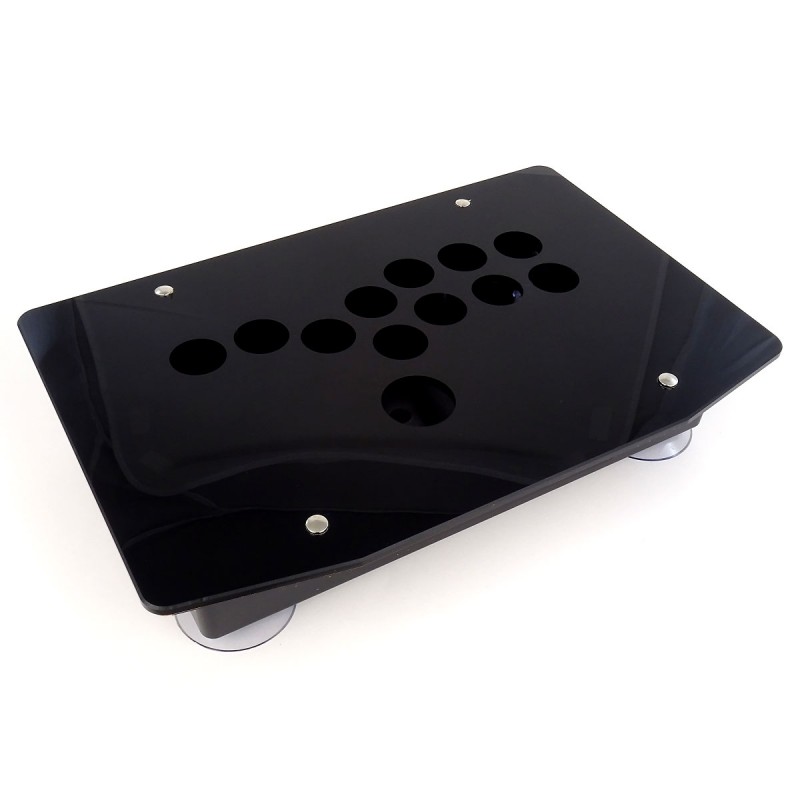
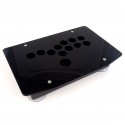
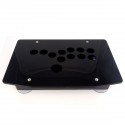
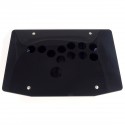
Black Arcade Hitbox case with acrylic made cover and a PVC base. 12 buttons in total.
 1 year warranty
 Shipments in 24h / 48h
 15 day return policy
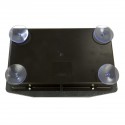
Arcade Hitbox in Black color with up to 12 action buttons: 1 x 30mm diameter and 11 x 24mm diameter. The top cover of this Hitbox is made of Plexiglass while the rest of the controller is made of PVC. This Hit Box controller has 4 suction cups on the base which provides great grip and stability. If we place the controller on a glass surface, no matter how hard we hit the controllers, the panel will not move.
Hit Boxes are a new type of controller developed for modern fighting games with 3D movement in mind (although also for retro 2D games). Hit Box controllers do not have the presence of arcade-sticks because they are not ideal for 3D games and lose accuracy. These controllers feature arcade buttons and a special control panel layout. A Hitbox arcade control panel is a mix between a conventional arcade stick and a desktop keyboard. Each button corresponds to an in-game action including also the moves of our game character.
An Arcade Hit Box is more accurate than a panel mounted with an arcade joystick and adds speed by eliminating the physical travel of our wrist, making it more difficult to make a mistake.
We can find Hit Box controllers where the placement of the buttons has a half-moon scheme, being very similar to the WASD layout of a keyboard. However, some users modify or mount these panels to their own liking, hence being a very fun product to mod.
The assembly of the controller is not complicated at all. We recommend purchasing Sanwa, Seimitsu buttons or similar components and a Zero Delay, Xin Mo 1 player encoder or the NO LAG Daemon Encoder. This Hitbox has a small hole in the back to guide the cable that will come out of the encoder.
Black Arcade Hitbox case with acrylic made cover and a PVC base. 12 buttons in total.